Water damage is one of the most common reasons an ECU stops communicating or creates several unrelated fault codes at the same time. The difficult part is that the ECU is not always the first part suspected. A vehicle may arrive with a no-start fault, intermittent limp mode, injector faults, throttle faults, immobiliser faults or no communication on a diagnostic scan. If water has entered the ECU casing or loom connector, replacing random sensors can quickly become expensive without getting closer to the cause.
The first step is always diagnosis. Before an ECU is opened or replaced, the power supply, grounds, fuses, relays and main communication lines should be checked. A dead ECU can be caused by a failed feed or bad earth, and a good ECU can look faulty if the wiring to it is damaged. Proper checks help separate a genuine ECU fault from a vehicle-side electrical fault.
Common signs of water damaged ECU problems
Water damaged ECUs often create faults that seem unrelated. You may see no communication with the engine ECU, a non-start condition, injector driver fault codes, throttle or pedal faults, immobiliser mismatch, fan running constantly, warning lights that appear together, or faults that come and go after rain or washing. Corrosion inside the ECU can also cause partial failure, where the vehicle starts sometimes but cuts out, loses power or refuses to communicate when warm.
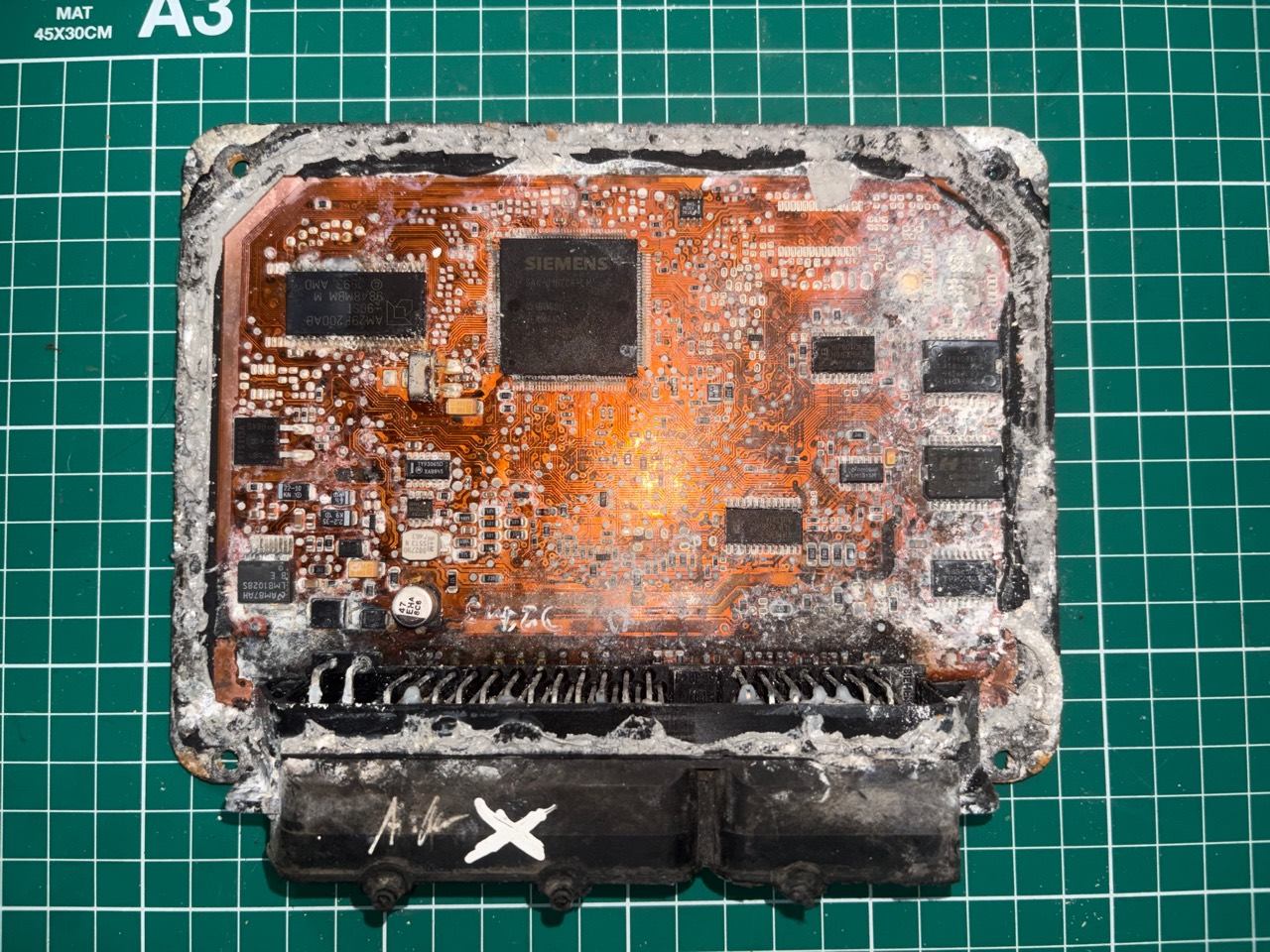
Visual inspection matters, but it should be done carefully. If the ECU has been wet, corrosion may be visible on the pins, around the connector, inside the case or on the circuit board. Some damage is obvious; other damage sits under components and cannot be judged from outside. If the ECU is opened, it should be handled carefully so further board damage is not caused.
Repair, data recovery or cloning
If the board damage is light, repair may be possible. That can involve cleaning corrosion, repairing damaged tracks, checking power circuits, repairing injector driver faults or stabilising communication faults. If the ECU is too damaged to repair but readable, the original data may be recovered and transferred to a suitable donor ECU. This is where ECU cloning can save time compared with coding a completely unknown unit from scratch.
If the original ECU is unreadable, the job becomes more complicated. A normal clone may not be possible, and the next route depends on the vehicle, immobiliser system, available donor ECU and what data can be recovered from the original unit. This is why it is worth sending clear photographs of the ECU label and fault details before buying a donor. The wrong donor can waste money and delay the repair.
Real Case: SEAT Cordoba Water-Damaged ECU
A water-damaged ECU from a 2000 SEAT Cordoba 1.9 TDI was assessed after the original unit was damaged by water ingress. The required original data was recovered and transferred to a compatible donor ECU.
This case demonstrates why donor compatibility and original-data recovery must be checked before buying replacement parts.
Read the Full SEAT Cordoba Case Study →
What to send before booking
Send the vehicle registration, make, model, year, engine size, symptoms, fault codes and clear photographs of the ECU label. If the ECU has visible water damage, mention that before posting it. For postal jobs, package the ECU securely, protect the connectors and use tracked delivery. Initial inspection normally begins after the ECU arrives, and you will receive an update after inspection. Straightforward cloning may be completed quickly, but damaged or unreadable ECUs can take longer where donor sourcing or data recovery is required.
For local customers around Carrick-on-Suir, Clonmel, Waterford, Kilkenny and Tipperary, vehicle-side checks may also be useful before removing the ECU. For customers and garages elsewhere in Ireland, postal ECU repair and cloning is available where the ECU type and condition support it.
It is also worth checking why the ECU became wet in the first place. Blocked scuttle drains, broken covers, poor previous repairs, damaged seals or water tracking through the wiring loom can all cause a replacement ECU to fail again. If the water path is not fixed, even a repaired or cloned ECU may be put straight back into the same risk.
A good repair route should leave you with a clear explanation: whether the ECU was repaired, whether data was recovered, whether a donor was used, and whether any vehicle-side checks are still recommended. That record is useful if the fault returns or if another garage needs to understand what was done later.