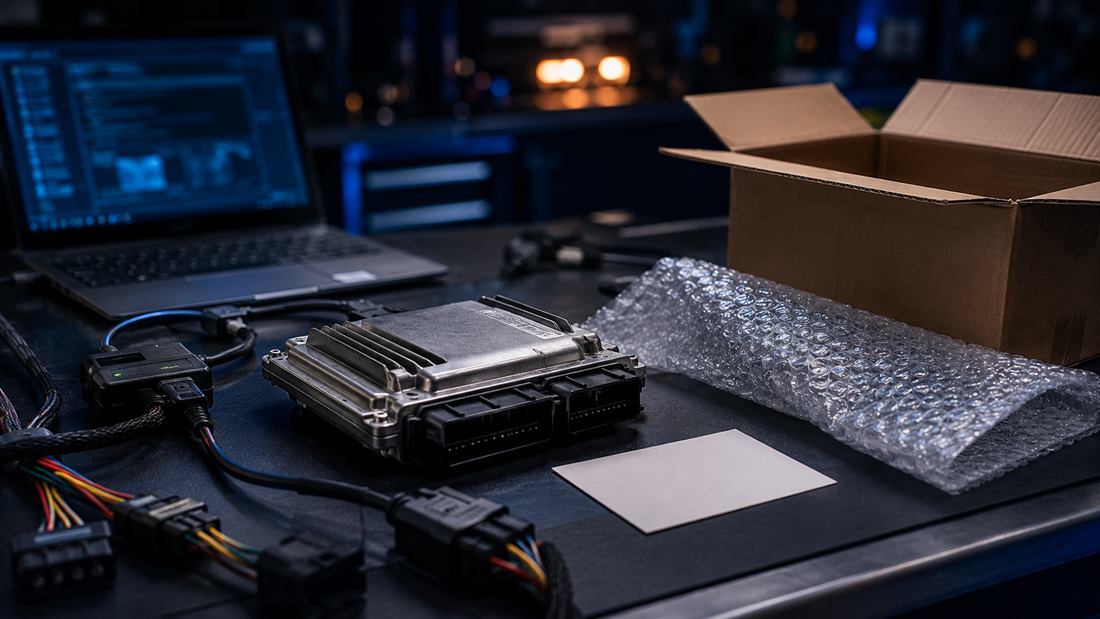
ECU cloning by post can be a practical option when a vehicle has a failed engine ECU and the unit can be removed safely. It is useful for customers and garages across Ireland who do not want to transport the full vehicle for bench work. The important point is that cloning is not just copying a file blindly. The original ECU, donor ECU and immobiliser data all need to be compatible before the job can be confirmed.
In a typical cloning job, data from the original ECU is read and transferred to a matching replacement ECU. This may include immobiliser information, configuration data and software needed for the replacement unit to work correctly with the vehicle. If the original ECU can be read and the donor ECU is suitable, this can avoid extra coding work and help the vehicle return to use with the correct identity data.
Do not buy a donor ECU too quickly
One of the biggest delays in ECU cloning is an incorrect donor ECU. Two ECUs can look similar and still be different internally. Hardware number, software version, processor type, board layout and immobiliser system can all matter. Before buying a used ECU, send clear photographs of the original ECU label and the donor ECU label. This gives the best chance of checking whether the donor is likely to be suitable.
A donor ECU should normally match the original unit as closely as possible. In some cases there may be compatible alternatives, but that depends on the ECU family and vehicle system. Buying the cheapest ECU online can cost more in the end if it cannot be cloned or if it has its own hidden fault.
What if the original ECU is damaged?
Postal cloning is easiest when the original ECU still communicates and its data can be read. If the original ECU has water damage, burnt tracks or no communication, the first stage is inspection and testing. Sometimes data recovery is possible even when the ECU does not work normally in the vehicle. Sometimes the board is too damaged or the memory cannot be recovered. That is why no honest ECU cloning service should guarantee every unit before inspection.
Initial inspection normally begins after the ECU arrives. Straightforward cloning jobs may be completed quickly, but damaged or unreadable ECUs can take longer, especially where donor sourcing or data recovery is required. You should expect an update after inspection rather than a fixed promise before the ECU has been checked.
Details to include with a postal ECU job
Before posting anything, send the vehicle registration, make, model, year, engine size, fault codes, symptoms, whether the vehicle starts, and clear photographs of the ECU label. If you already have a donor ECU, send photographs of that label too. When posting, include your name, phone number, vehicle details and a short note explaining whether you need testing, repair, cloning or data transfer.
Use strong packaging, protect the connectors and use tracked delivery. ECU repair and cloning is available by post across Ireland where the ECU type and condition support it. Local customers around Carrick-on-Suir can also arrange vehicle-based checks where needed.
If the vehicle has other electrical faults, make a note of them before removing the ECU. Problems such as a flat battery, jump-start damage, water in fuse boxes, blown feeds or immobiliser faults can look like ECU failure from the driver seat. The more context included with the posted unit, the easier it is to decide whether bench work is likely to solve the problem or whether the vehicle itself still needs testing.
For garages, this is especially important when a customer has already supplied a used ECU. Confirming donor suitability first can prevent wasted labour and repeated removal. For private customers, it avoids buying parts based only on a matching engine size or a seller description online.