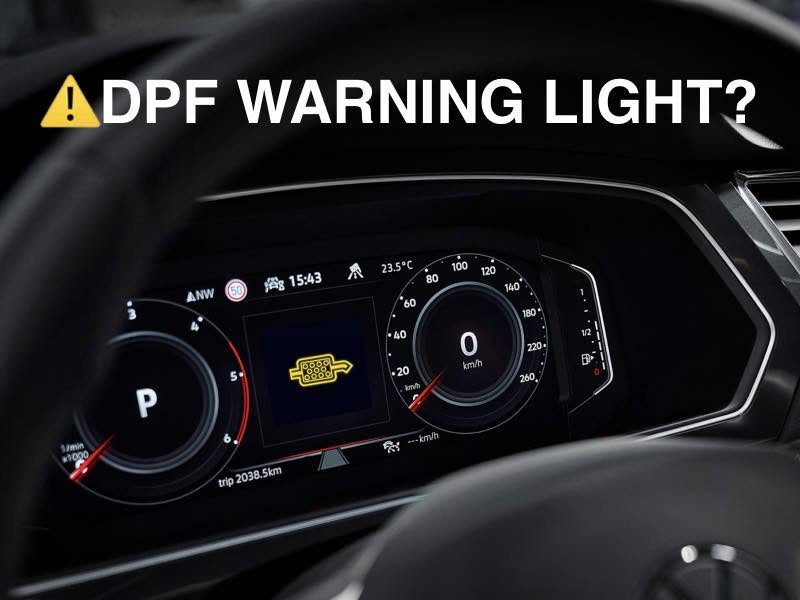
A DPF warning light does not always mean the diesel particulate filter itself is the only problem. The warning can be triggered by soot loading, failed regeneration, a pressure sensor fault, temperature sensor fault, split pressure hose, EGR fault, boost leak, thermostat problem, short-trip driving pattern or engine running issue that creates too much soot. Replacing parts without diagnosis can get expensive quickly.
The correct first step is to read the fault codes and live data. A proper check should look at differential pressure, soot loading, exhaust temperature readings, regeneration history, sensor plausibility and whether related engine faults are present. If another fault is causing the DPF to block repeatedly, cleaning or replacing the filter without fixing the cause can bring the same warning back.
Common symptoms connected to DPF faults
Drivers often notice loss of power, limp mode, frequent regeneration, cooling fans running after short drives, higher fuel use, smoke, a strong smell after regeneration, or an engine management light alongside the DPF light. Some vehicles show a message telling the driver to keep driving for regeneration. Others go straight into reduced power when soot load or pressure readings are outside expected limits.
A blocked DPF can increase exhaust back pressure and put extra stress on related components. That is why the warning should not be ignored for weeks. At the same time, panic replacing the DPF is not always the right answer. Diagnosis should identify whether the filter is genuinely blocked, whether regeneration is being prevented, or whether a sensor is giving the ECU bad information.
Cleaning, repair or software support
Where the filter is physically blocked but otherwise serviceable, cleaning or a controlled regeneration may be suitable. If the pressure sensor, temperature sensor or wiring is faulty, those problems should be handled first. If the fault is related to previous repair attempts or the vehicle has a specific intended use, DPF-related software support may be discussed after diagnosis. Emissions-related software work may be suitable only for off-road, motorsport or export use where applicable, and the customer remains responsible for road legality and emissions compliance.
The safest approach is diagnosis first, options second. That protects the customer from paying for the wrong part and gives a clearer explanation of what is actually causing the warning. A DPF issue on a car used for short journeys may need different advice than a van doing long motorway runs.
What information to send
Send the vehicle registration, mileage, engine size, current warning messages, fault codes if available, whether the car is in limp mode and whether any parts have already been replaced. If the vehicle has had DPF cleaning or forced regeneration attempted, mention that too. Customers around Carrick-on-Suir, Clonmel, Kilkenny, Waterford and Tipperary can arrange local diagnostic support before deciding on repair or software options.
Try not to clear codes before taking photographs or writing them down. Historic and pending codes can give useful clues, especially when the fault comes and goes. If you have live data from another diagnostic tool, details such as soot mass, differential pressure at idle, exhaust temperature readings and last regeneration distance can help build a better picture before the vehicle is seen.
The most useful outcome is not simply switching off a warning light. The aim is to understand why the warning appeared, whether the vehicle is safe to drive, what repair options make sense and whether any software route is suitable for the intended use. That advice is stronger than guessing from the dashboard message alone.
If the vehicle is still driving normally, it may be tempting to wait. The risk is that soot loading can rise until regeneration is blocked or limp mode becomes permanent. Early diagnosis usually gives more options than waiting until the vehicle is already restricted.